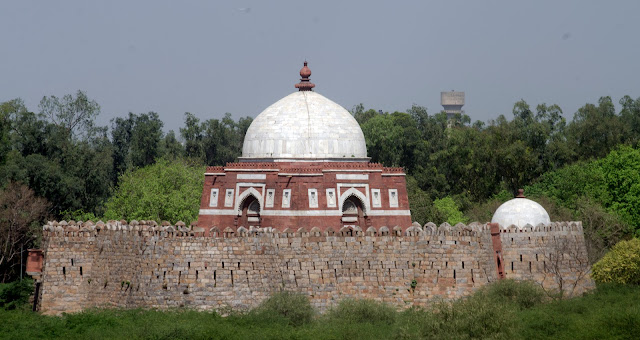
Q.1. Prior to becoming Sultan, Ghiyas-ud-din Tughlaq was the governor of?
(a) Dipalpur
(b) Badaun
(c) Kara
(d) Bhatinda
Q.2. Which of the following Tughlaq rulers was responsible for establishing the 'Diwan-e-Amir Kohi' department?
(a) Ghiyas-ud-din Tughlaq
(b) Muhammad bin Tuhglaq
(c) Firoz Shah Tughlaq
(d) None of the above
Q.3. Between whom was the battle of Lahrawat fought in 1320 AD?
(a) Guiyas-ud-din Tughlaq and Khusrav Khan
(b) Guiyas-ud-din Tughlaq and Malik Kafur
(C) Mubarak Shah Khilji and Khusrav Khan
(d) Malik Kafur and Khusrav Khan
Q.4. Muhammad bin Tughlaq was well versed in
(a) Astronomy
(b) Jurisprudence
(c) Medicine
(d) All of the above
Q.5. The tomb of Sufi saint Shah Rukn-e-Alam in Multan was built by_______.
a) Qutub-ud-din Aibak
b) Alau-ud-din Khiliji
c) Ghiyas-ud-din Tughlaq
d) Firoz Shah Tughlaq
Q.6. When did Muhammad bin Tughlaq shift his capital from Delhi to Daulatabad?
a) 1325
b) 1326
c) 1327
d) 1328
Q.7. Which city was named Daulatabad by Muhammad bin Tughlaq?
(a) Devagiri
(b) Badaun
(c) Dwarasamudra
(d) Warangal
Q.8. Which Tughlaq Sultan built the Tughlaqabad Fort?
(a) Ghiyas-ud-din Tughluq
(b) Muhammad bin Tughlaq
(c) Feroz Shah Tughlaq
(d) Muhammad Shah
Q.9. Which Delhi Sultanate Sultan died from the collapse of the pavilion built by his son?
(a) Ghiyas-ud-din Tughlaq
(b) Ala ud-din Khilji
(c) Jalal ud-din Khilji
(d) Feroz Shah Tughlaq
Q.10. In which year did Muhammad bin Tughlaq succeed to the throne of Tughlaq dynasty?
(a) 1324
(b) 1325
(c) 1326
(d) 1327
Answers
1-a
Notes
Guiyas-ud-din Tughlaq worked under the Khilji rule as the governor of Dipalpur (now in Pakistan).
2-b
Notes
Muhammad bin Tuhglaq had established the 'Diwan-e-Amir Kohi' department related to agriculture.
3-a
Notes
The battle of Lahrawat was fought in 1320 AD between Gazi Malik or Guiyas-ud-din Tughlaq and Khusrav Khan. Guiyas-ud-din Tughlaq defeated defeated Khusrav and beheaded Khusrav. Gazi Malik became the Sultan of Delhi Sultanate under the title of Ghiyas-ud-din Tughluq and the dynasty, he founded, is known as Tughluq dynasty.
4-d
Notes
With an excellent command on Arabic and Persian, Muhammad bin Tughlaq was well versed in astronomy, jurisprudence, logic, philosophy, medicine, mathematics, and rhetoric.
5-c
Notes
The Tomb of Shah Rukn-e-Alam is the mausoleum of the Sufi saint Sheikh Rukn-ud-Din Abul Fateh. The shrine is considered to be the earliest example of Tughluq architecture. It is located in Multan in Pakistan.
6-c
Notes
In 1327 a rebellion by his cousin Bahauddin Gurshasp, governor of Sagar, prompted Muhammad bin Tughluq to transfer his capital from Delhi to centrally located Devagiri, which he named Daulatabad. However, this experiment of his did not go down well with the Delhi populace. This forced the Sultan to retransfer the capital to Delhi.
7-a
Notes
Devagiri is in Maharashtra.
8-a
Notes
Ghiyas-ud-din Tughluq is credited with the construction of the fortified city of Tughlaqabad, located on the Mehrauli-Badarpur Road in Delhi.
9-a
Notes
Ghiyas-ud-din Tughlaq, founder of the Tughlaq dynasty, died in 1325 from the collapse of the pavilion which was constructed by his son Muhammad bin Tughlaq.
10-b
Notes
Muhammad bin Tughlaq was the Tughlaq Sultan of Delhi from 1325 to 1351.
Comments
Post a Comment