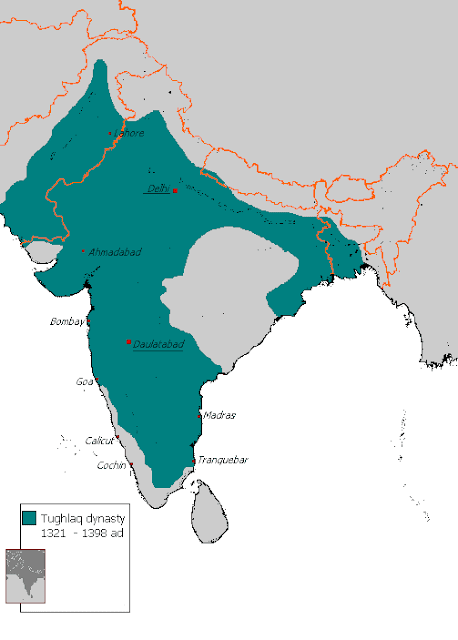
Q.1. Which Delhi sultan among the following has been described as the “Mixture of Opposites”?
(a) Qutub-ud-din Aibak
(b) Ala-ud-din Khiliji
(c) Ghiyasuddin Balban
(d) Muhammad bin Tughlaq
Q.2. Who among the following rulers of Delhi Sultanate had introduced the token currency?
(a) Muhammad Bin Tughlaq
(b) Alauddin Khilji
(c) Ghiyasuddin Balban
(d) Firoz Shah Tughlaq
Q.3. Who among the following has written Futuhat-i-Firozshahi?
(a) Ziauddin Barani
(b) Shams-i-Siraj Afif
(c) Amir Khusrav
(d) Firuz Shah Tughlaq
Q.4. Tarikh-i Firoz Shahi has been written by
(a) Ziauddin Barani
(b) Shams-i-Siraj Afif
(c) Both a and b
(d) Yayiha bin Ahmad Sarhindi
Q.5. Which of the following rulers of Delhi Sultanate had made Iqtadari system heredity?
(a) Ghiyasuddin Tughlaq
(b) Firoz Shah Tughlaq
(c) Muhammad Bin Tughlaq.
(d) Nasiruddin Mahmud Shah Tughlaq
Q.6. The medieval text Fatwa-i-Jahandari was written by__________
(a) Ziauddin Barani
(b) Shams-i-Siraj Afif
(c) Minhaj-i-Siraj
(d) Isami
Q.7. Who among the following Sultans of Tughlaq dynasty had introduced new coins “Adha and Bikh”?
(a) Firoz Shah Tughlaq
(b) Ghiyasuddin Tughlaq
(c) Muhammad Bin Tughlaq
(d) Nasiruddin Mahmud Shah Tughlaq
Q.8. What years cover the span of Firoz Shah Tughlaq's reign?
(a) 1320- 1325
(b) 1325 – 1351
(c) 1351- 1388
(d) 1394- 1413
Q.9. The last ruler of the Tughlaq dynasty of the Delhi sultanate was?
(a) Firoz Shah Tughlaq
(b) Nasir-ud-Din Mahmud Shah Tughluq
(c) Ala ud-din Sikandar Shah
(d) Abu Bakr Shah
Q.10. Who was the ruler of the Delhi Sultanate when Amir Timur (Tamerlane) invaded India?
a) Balban
b) Ghiyasuddin Tughlaq
c) Muhamamd bin Tughlaq
D) Nasir-ud-din Mahmud
Answers
1- d
Notes
Muhammad bin Tughlaq’s idiosyncratic behaviour had earned him several epithets including “Mixture of opposites”.
2- a
Notes
Muhammad Bin Tughlaq had carried out several monetary experiments. Edward Thomas has described him 'Prince of Moneyers'.
3-d
Notes
Futuhat-i-Firozshahi is an autobiographical account written by the third Tughlaq ruler Firuz Shah Tughlaq.
4- c
Notes
Tarikh-i Firoz Shahi was written by Zia ud Din Barani. Shams-i-Siraj Afif had also written a book by the same title.
5- b
Notes
Firoz Shah Tughlaq had made Iqta (assignment of land revenue) system hereditary.
6- a
Notes
- Fatwa-i-Jahandari was written by Ziauddin Barani.
- Abdul Malik Isami, popularly known as Isami, has written Futuh-us-Salatin which he completed in 1350 AD. He resided in the court of the founder of the Bahmani Sultanate, Ala-ud-Din Bahman Shah, to whom he dedicated Futuh-us-Salatin.
- He began writing the Futuh-us-Salatin in December 1349 and completed it in May 1350 AD.
7-a
Notes
The third Tughlaq Sultan Firoz Shah Tughlaq had introduced to new coins Adha (50% Jital) and Bikh (25% Jital).
8- c
Notes
Firoz Shah Tughlaq succeeded to the throne in 1351 after the demise of his cousin Muhammad-bin-Tughlaq who had become second Tughlaq sultan in 1325 AD. Firuz Shah Tughlaq in 1388, aged eighty-two
9- b
Notes
Nasir-ud-Din Mahmud Shah Tughluq (reign: 1394 – February 1413 CE), also known as Nasiruddin Mohammad Shah, was the last sultan of the Tughlaq dynasty
10-d
Notes
It was during the reign of Nasiruddin Mahmud (1394-1413), the last of the Tughluq rulers, in the years 1398-99, that Amir Timur, the terrible Mongol military leader of Central Asia, invaded India creating havoc in the forms of massacres and plunders.
Comments
Post a Comment